
10-YEAR WARRANTY

ONLINE PARTS STORE

MADE IN BRITAIN
Trailer Servicing
To ensure your Eco-Trailer remains safe, reliable, and fully covered under our 10-year chassis warranty, servicing must be carried out by a trained professional who is familiar with trailer systems.
A written service record should be completed and retained by the owner after every service. These records may be requested in the event of a warranty claim and are essential to demonstrate that the trailer has been correctly maintained.
The following checklist details all safety-critical items that must be inspected and adjusted at each service. Servicing should be undertaken at least once every 12 months or every 6,000 miles (whichever comes first).
For component specific manuals please visit our downloads page.
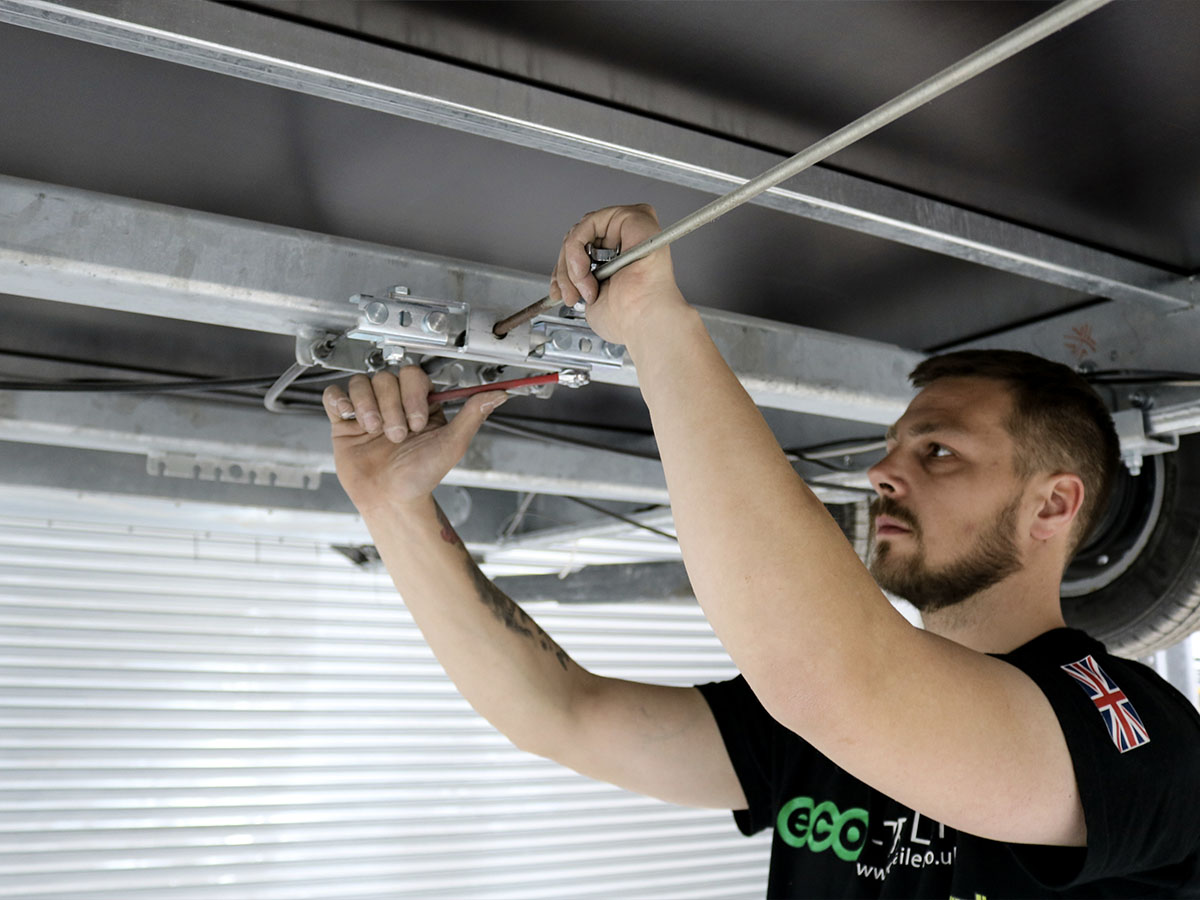
Coupling & Front End
We inspect all coupling components to ensure secure and safe towing.
Hitch/coupling head is secure and locking correctly
Breakaway cable condition and attachment
Handbrake – lever vertical when fully applied
Jockey wheel operation and clamp secure
Safety ball/security device present (if fitted)
Towball grease (only for standard couplings)
Stability coupling – check friction pads, replace if worn, no grease required
Braking System
Brake performance is critical for trailer safety. We adjust and check all brake components.
Brake cables & linkages free play and condition
Brake shoes, drums/discs wear and adjustment
Bearings condition and correct lubrication
Overrun brake and handbrake function
Axles & Suspension
We inspect all load-bearing components for strength and reliability.
Axles – mounting bolts and condition
Stub axles are secure and undamaged
Suspension arms, bushes, and dampers condition
Minimum 50mm tyre clearance when unladen
All welds are inspected for cracks or weakness
Wheels & Tyres
Correct tyres and wheels are essential for safe towing.
Wheel hubs – greased and secure
Wheel nuts torqued to specification
Rims – no cracks, bends, or corrosion
Tyres – tread depth, sidewalls, and pressure checked
Spare wheel inspected (if fitted)
Body & Frame
We ensure the chassis and bodywork remain in sound condition.
Chassis – free from cracks or corrosion
Back plates – inspected
Body fittings, hinges, and catches secure
Floor – no structural damage
Ramp / rear door – condition, hinges, and locks
Tilt mechanism – smooth operation, secure pins/valves
Seals checked for water ingress
Lighting & Electrics
We check all lighting and electrical systems for road safety compliance.
Wiring looms – no damage or chafing
All road lights tested – brake, tail, indicators, sidelights, fog
Reflectors and warning triangles are present
Battery voltage and condition
Charging system tested (if fitted)
Accessories & Securing Systems
We make sure all load securing equipment is safe and functional.
Wheel straps – condition of webbing and ratchets
Lashing points secure
Tyre rack fixings (if fitted)
Prop stands condition (if fitted)
Winch (Electric, Wireless Remote)
We ensure your electric winch is safe and operational.
Cable/strap – no fraying or damage
Wireless control tested
Drum keeps at least 5 turns of cable
Lubricate moving parts
Final Checks & Road Test
We road test every trailer to confirm performance and handling.
Wheel alignment and ride height are correct
Smooth braking in a straight line
Trailer tracks correctly behind the tow vehicle
No unusual noises or vibrations
FAQs
What is Type Approval, and can I use my trailer abroad?
All Eco-Trailer trailers are type approved and legal for road use in the UK and EU.
How often should I wax the trailer?
At least once a year, ideally more often.
When is payment required?
Payment terms will be confirmed at order.
Are electrical upgrades factory-fitted or DIY?
Both options are available depending on the upgrade.
Can my trailer be upgraded in the future?
Yes. Many models are designed to accept future upgrades and modular features.
Can I use traffic film remover (TFR)?
No. TFR removes protective wax layers and can damage the finish.
How do I order parts?
Contact our team or visit the parts section of our website.
What should the tyre pressures be?
Tyre pressures depend on trailer load and tyre specification. Always refer to the manufacturer guidance supplied with the trailer.
Is my towing vehicle suitable?
Your towing vehicle must have sufficient towing capacity, nose weight allowance, and correct licence entitlement. We are happy to help check suitability.
Are your trailers suitable for frequent long-distance use?
Yes.
Are spare parts readily available?
Yes.
What should I use to secure the vehicle inside the trailer?
Use proper wheel straps or restraints designed for vehicle transport. Avoid chassis or suspension tie-downs unless specified.